Crochet
Aran Stitch Crochet Cardigan and Hat Pattern
A practical guide to the Red Heart Aran stitch baby cardigan and matching hat, with source-based materials, preparation advice, construction context and clear links to the original pattern.

An Aran stitch crochet cardigan and matching hat can make a thoughtful baby-gift project, especially when the design has clear sizing options and coordinated finishing. This Aran stitch set combines raised cables, little bobbles and ribbed edges in a soft gray palette. The cardigan can sit over familiar cotton separates, while the matching hat brings the two pieces together without needing an elaborate outfit.
This is an original editorial companion to the design by Heather Lodinsky for Red Heart, published by Yarnspirations. Use the official pattern page and its download for the complete instructions. We have not physically made or independently tested this set. The images are AI-generated illustrations of the project’s stated features, not verified samples or stitch diagrams; see our AI Disclosure.
What makes this Aran stitch crochet cardigan special
The interest comes from the fabric itself. Raised cable columns contrast with smaller bobble textures, while the ribbed neckline, cuffs and lower edge give the cardigan a defined finish. A single yarn color lets those changes in texture remain visible. It also keeps color planning straightforward if you prefer concentrating on the stitch work.
The Aran stitch crochet cardigan and coordinating hat make the project flexible: you can plan the complete set or focus on one piece. For a gift, ask which garment is most useful before buying yarn. The pattern is rated intermediate, so its appeal is skill-building rather than a promise of a quick first project. Reading textured repeats, maintaining shaping and completing seams all deserve attention. There is no reliable fixed completion time; allow room for swatching, checking and finishing.
Crocheter’s tip: Mark your chosen cardigan size throughout the working copy, then record the hat size separately. Matching accessories do not necessarily use matching size labels.
Before you begin the Aran stitch crochet cardigan and hat
The cardigan is offered in age-labeled sizes from six to twenty-four months. Treat those labels as a starting point: compare the source’s finished measurements with a similar cardigan the recipient already wears comfortably, and discuss the desired wearing room with their caregiver. The hat uses its own sizing information, so select it independently.
- Craft: crochet, using US terminology
- Publisher’s skill level: intermediate
- Texture: twisted cable and little bobble patterns
- Cardigan construction: separate back, fronts and sleeves, followed by assembly and finishing
- Hat construction: worked flat, shaped and seamed, with a folded brim
- Original pattern reference: RHC0238-018212M
Read the abbreviations and special-stitch explanations before starting. Some post stitches refer to an earlier row, so tracking the written row and the stitch location matters. Keep a notebook beside the pattern for your hook choice, gauge result and stopping point. That small record is particularly useful when returning to a sleeve or making the second matching piece.
Gather the yarn and finishing supplies
The following list summarizes the original specification, not a claim about current stock availability. Confirm your selected size and whether you are making the cardigan, hat or complete set before purchasing. Keep the yarn labels with the project.
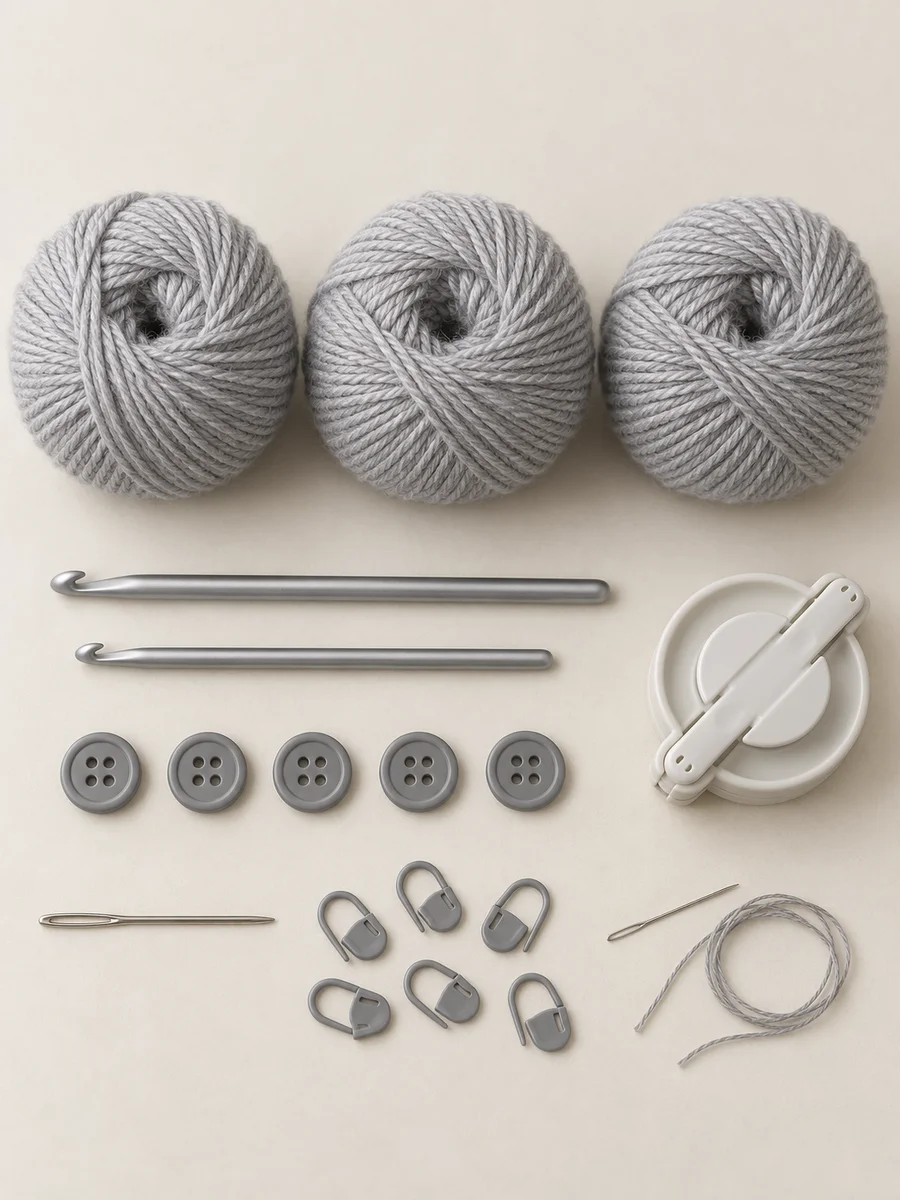
- Yarn: Red Heart Anne Geddes Baby in 411 Dolphin. The original solid-color ball specification is 100 g with 340 yd / 310 m.
- Hooks: 3.75 mm (US F-5) and 5.5 mm (US I-9), adjusted as needed to obtain the required gauge.
- Finishing: yarn needle, locking stitch markers, five 19 mm buttons, sewing needle and matching thread.
- Optional pompom: a pompom maker or the cardboard option described in the source.
| Cardigan size label | Cardigan only | Complete set |
|---|---|---|
| 6 months | 2 | 3 |
| 12 months | 3 | 4 |
| 18 months | 3 | 4 |
| 24 months | 4 | 5 |
The original hat allowance is one ball. When substituting yarn, compare meterage and the resulting fabric rather than buying the same number of differently sized balls. A change in fiber, thickness or twist can affect texture, drape, dimensions and the amount needed. Swatch before committing to the garment.
How the cardigan and hat come together
The Aran stitch crochet cardigan pieces are worked from the lower edges upward in rows. Their texture is established before the shaping, so the challenge is keeping the cable and bobble placement organized as edges change. Follow the original designer’s directions for every count, repeat and size-specific adjustment.
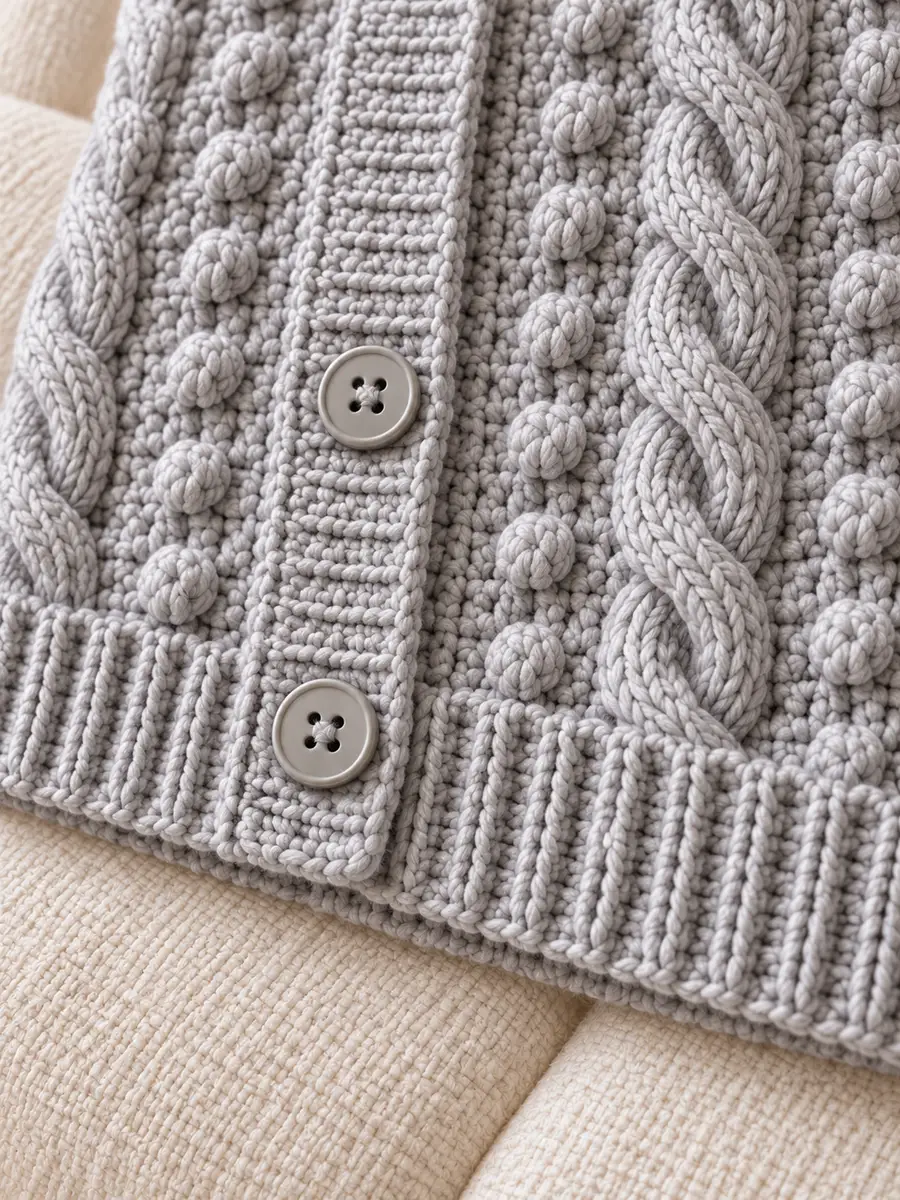
The back and two fronts are separate pieces, and the fronts need to relate correctly to one another at the neckline and opening. Make notes at the end of each session. Before assembly, place the pieces together and compare their dimensions with the source. Resolve an unexpected mismatch before sewing makes it more awkward to correct.
The sleeves are also worked separately. Assembly, bands and edging complete the cardigan; these deserve their own project time. The smaller hook is used for the ribbed finishing described in the pattern. The hat has its own shaped fabric, seam and folded brim, with a pompom as an optional finish.
This overview is not a substitute for the designer’s full PDF. It intentionally omits row instructions and stitch counts. If you plan to sell finished items, check the designer’s or publisher’s current usage terms rather than assuming that a free download grants permission.
Ways to use or gift the finished set
For everyday clothing, the gray Aran stitch crochet cardigan can accompany a plain cotton top and simple trousers. Keeping the other pieces smooth lets the raised crochet texture remain the focus. Ask the caregiver which layers and fastenings they prefer; an attractive color combination alone does not establish a suitable fit or use.
As a gift, include the yarn label or a written care note, the chosen size and your final measurements. Say which yarn you actually used rather than copying the original specification after making a substitution. A card crediting the original design is a useful addition if the recipient wants to find the pattern later.
You can also document the work with your own finished-project photographs and notes about changes. Keep decorative AI imagery separate from that record. A real photograph of your completed set is the appropriate reference for discussing what you made, how the seams sit and whether the two pieces coordinate as intended.
Care that matches your chosen yarn
Follow the care directions on the yarn you use, including any instructions relevant to the fasteners or trims. The original yarn name does not establish how a substitute should be washed, dried or pressed. Avoid assigning a machine cycle or temperature without checking the label.
Support the garment while wet and reshape gently rather than pulling it into the expected dimensions. If flat drying is appropriate for the chosen yarn, arrange the pieces without stretching the bands. Let them dry fully before storing. Keep the cardigan folded rather than hanging it by narrow shoulder points, and inspect the finishing when preparing the set for use. Avoid heat or steam unless the materials’ care instructions permit it.
Helpful checks while you crochet
- Make gauge a separate task. Use the source’s checks before beginning the garment. Do not stretch a swatch until it agrees with the target.
- Keep paired pieces comparable. Record the row where you stop and the measurements you checked, especially for the sleeves.
- Mark the correct stitch location. Read earlier-row references carefully instead of working automatically into the nearest visible stitch.
- Pause at shaping changes. Confirm the selected size and repeat placement before continuing across a shorter or wider row.
- Check the edges before joining. Compare pieces laid flat and correct an unexpected difference before making seams.
- Review the finish. Check bands, ends and fasteners rather than treating the last large crochet piece as the end of the project.
If a count and the fabric do not agree, return to the last point you can verify in the official instructions. Avoid inventing a correction solely to keep going. Save a note describing the problem so you can ask the publisher a precise question if needed.
Thoughtful ways to personalize the project
A different solid color is the simplest visual change, provided the replacement yarn meets the required gauge and produces a suitable fabric. Pale neutrals can make the raised texture easy to see; a darker shade changes the visual emphasis without changing the written construction. Test the actual yarn rather than relying on a product photograph.
A contrasting border is another possibility, but treat it as a modification: it affects color planning and may change yarn requirements. Keep notes so the cuffs, opening and hat finish remain coordinated. Choosing a different button style also calls for checking compatibility with the specified size and finished buttonholes.
Use the source’s size options instead of assuming that a larger hook alone creates a reliably larger garment. Extra length, different edging or a different yarn can alter proportions and finishing requirements. The optional pompom can be included or omitted according to the source and the recipient’s preferences.
Aran stitch crochet cardigan and hat FAQ
Is this a beginner crochet pattern?
The publisher rates it intermediate. Read the cable, bobble and shaping explanations before deciding whether it suits your experience. Practicing the unfamiliar texture separately can help, but this article does not relabel the set as a beginner pattern or promise a fixed completion time.
How should I choose the cardigan size?
Compare the official finished measurements with a similar cardigan the recipient already wears comfortably. Ask the caregiver about preferred wearing room. Select the hat size separately using its own fit information; the two pieces do not necessarily share equivalent size labels.
What can the finished cardigan be worn with?
A plain cotton top and simple trousers provide a quiet setting for the gray cable-and-bobble texture. Use the caregiver’s preferences and the actual garment fit to decide on layers. Keep decorative photographs separate from decisions about suitability for a particular child or situation.
Can I use another yarn or hook?
Yes, but check the resulting fabric against the original gauge and measurements. A different fiber or thickness can change dimensions, texture and the amount required. Record your actual yarn and hook so the second sleeve and matching hat can be approached consistently.
How much yarn do I need?
The table above summarizes the original solid-color ball quantities. Confirm the size and whether you are making one piece or the set in the PDF. For a substitute, compare its meterage per ball and allow for your modifications instead of transferring the original ball count blindly.
May I sell garments made from the pattern?
Check the original designer’s or publisher’s current usage terms. This article does not grant permission to sell finished items, redistribute the PDF or reproduce its instructions. Keep the pattern credit and source link with any project notes you share.
Explore our other crochet articles, including the hexi-cardigan guide and adult crew-neck cardigan article. Each is a separate project with its own materials and construction notes.
More ideas you’ll love
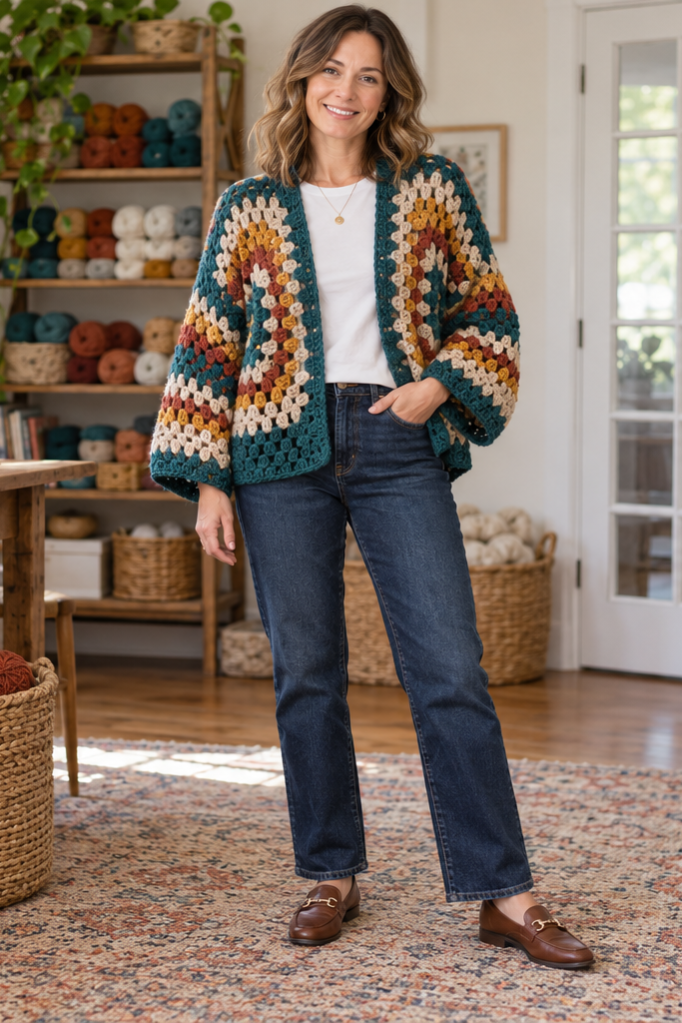
Beginner Crochet Hexi-Cardi Pattern: Both Sides Now
Make the Both Sides Now hexi-cardi with two granny-stitch hexagons. This beginner US-terms pattern includes sizes XS–5X, gauge,…
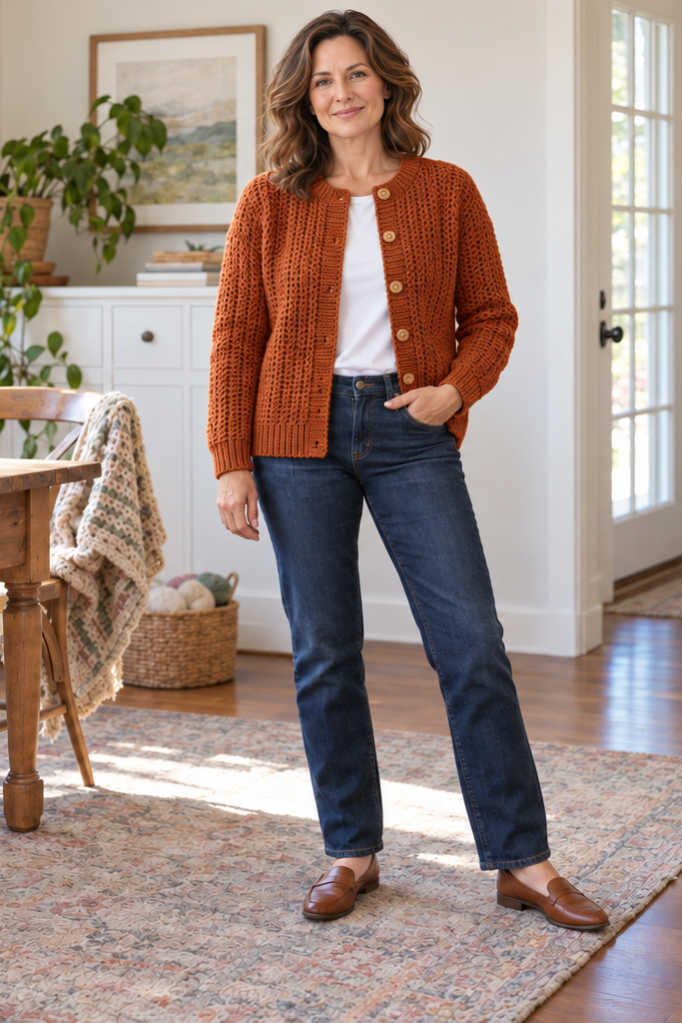

Crochet Crew-Neck Cardigan Pattern for Adults
A readable US-terms crochet cardigan pattern in sizes XS–5X, with gauge, finished measurements, yardage, stitch counts, fit adjustments,…