Winter
10 Winter Layering Outfit Ideas for Cold Days
Ten winter layering outfits for workdays, weekends, dinners, and cold commutes, with practical guidance on knit weight, coat room, hems, and footwear.
The short version
- Dress for the actual plan and weather.
- Choose footwear before fixing the hem length.
- Use removable layers when conditions may change.
- Repeat one color or texture to connect the outfit.
Good winter layering is less about adding the greatest number of garments and more about giving each layer a clear job. These outfits combine a breathable base, useful insulation, and outerwear with enough room to sit correctly.
Every look names the garments and explains the practical detail that makes the combination useful, so the idea can be adapted with similar pieces already in your wardrobe.
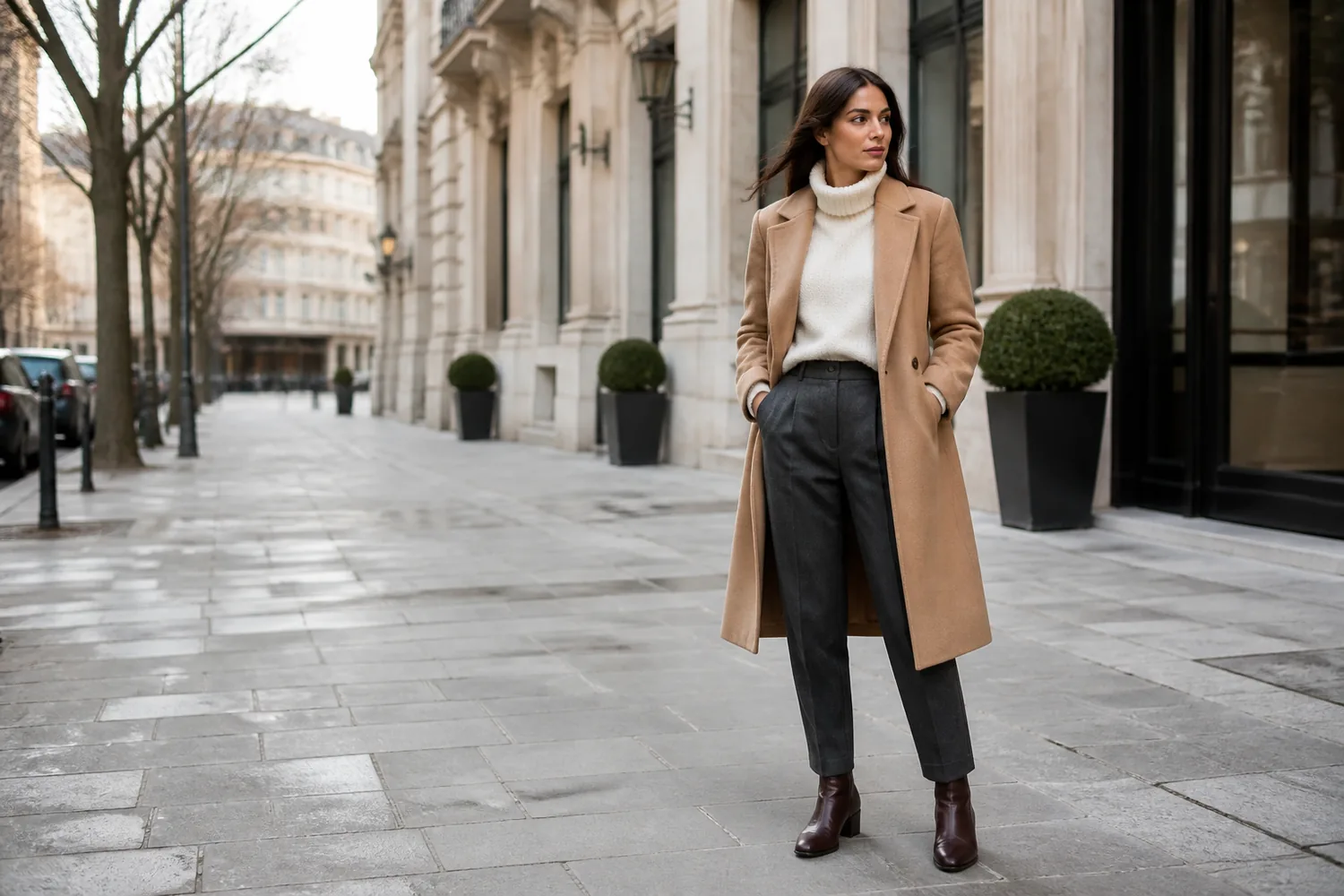
Camel Coat, Turtleneck, and Trousers
Wear a camel wool coat, ivory turtleneck, charcoal trousers, and brown ankle boots. Keep the knit fine enough to sit beneath the coat without bunching at the shoulders.
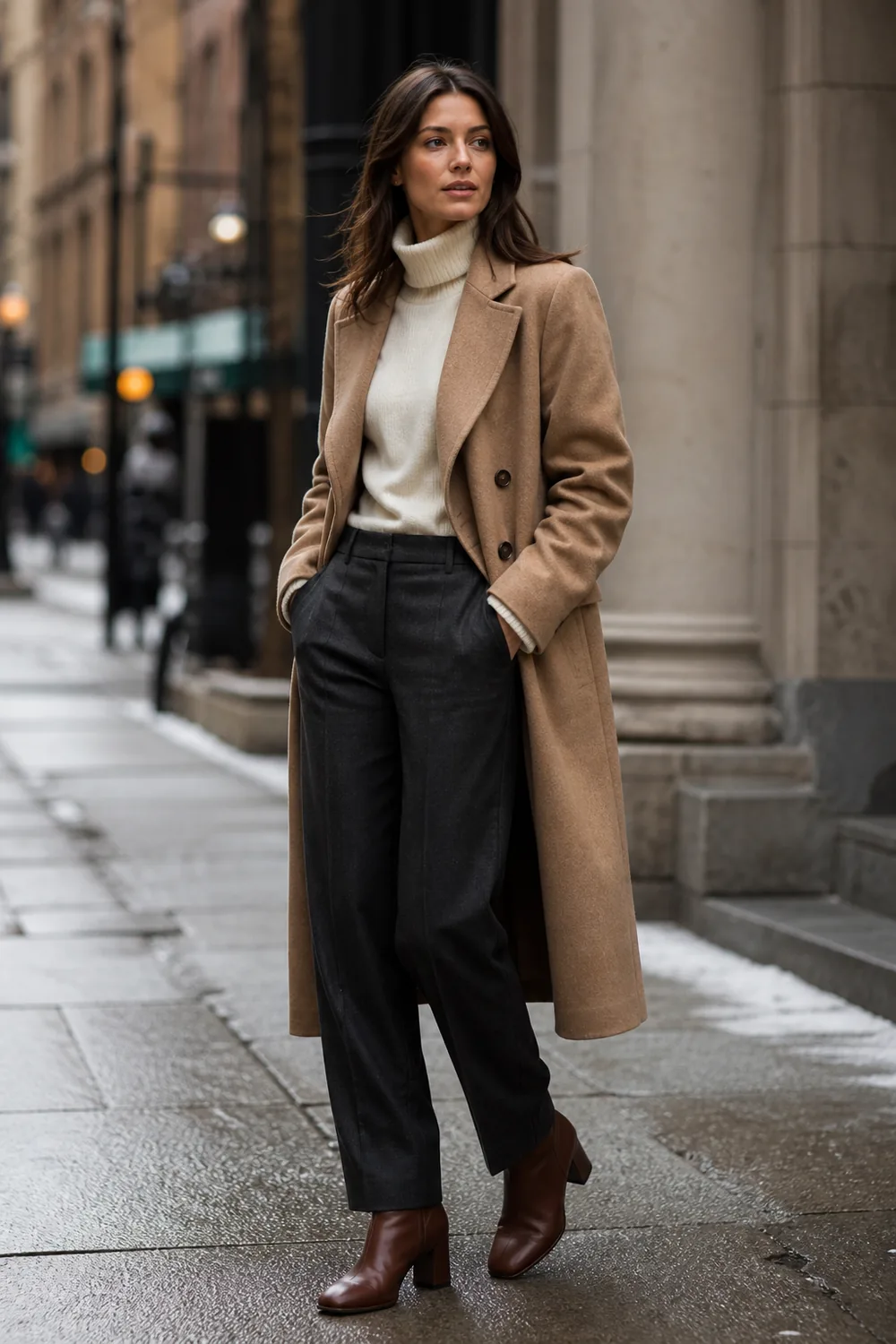
Why it works: The layers, footwear, and fabric weights suit the setting while keeping every garment visually distinct.
Puffer Jacket and Straight Jeans
Wear a navy puffer jacket, gray crewneck sweater, straight jeans, and black winter boots. Let the compact sweater provide insulation while the hip-length puffer keeps everyday movement easy.
Why it works: The layers, footwear, and fabric weights suit the setting while keeping every garment visually distinct.
Long Coat and Knit Dress
Wear a chocolate long coat over a forest ribbed midi dress with brown knee boots. The continuous dress layer reduces bulk at the waist and the tall boots cover the lower leg.
Why it works: The layers, footwear, and fabric weights suit the setting while keeping every garment visually distinct.
Blazer Under a Wool Coat
Wear a charcoal blazer over a blue shirt beneath a black wool coat with navy trousers. Choose an outer coat with generous armholes so the blazer lapels remain flat.
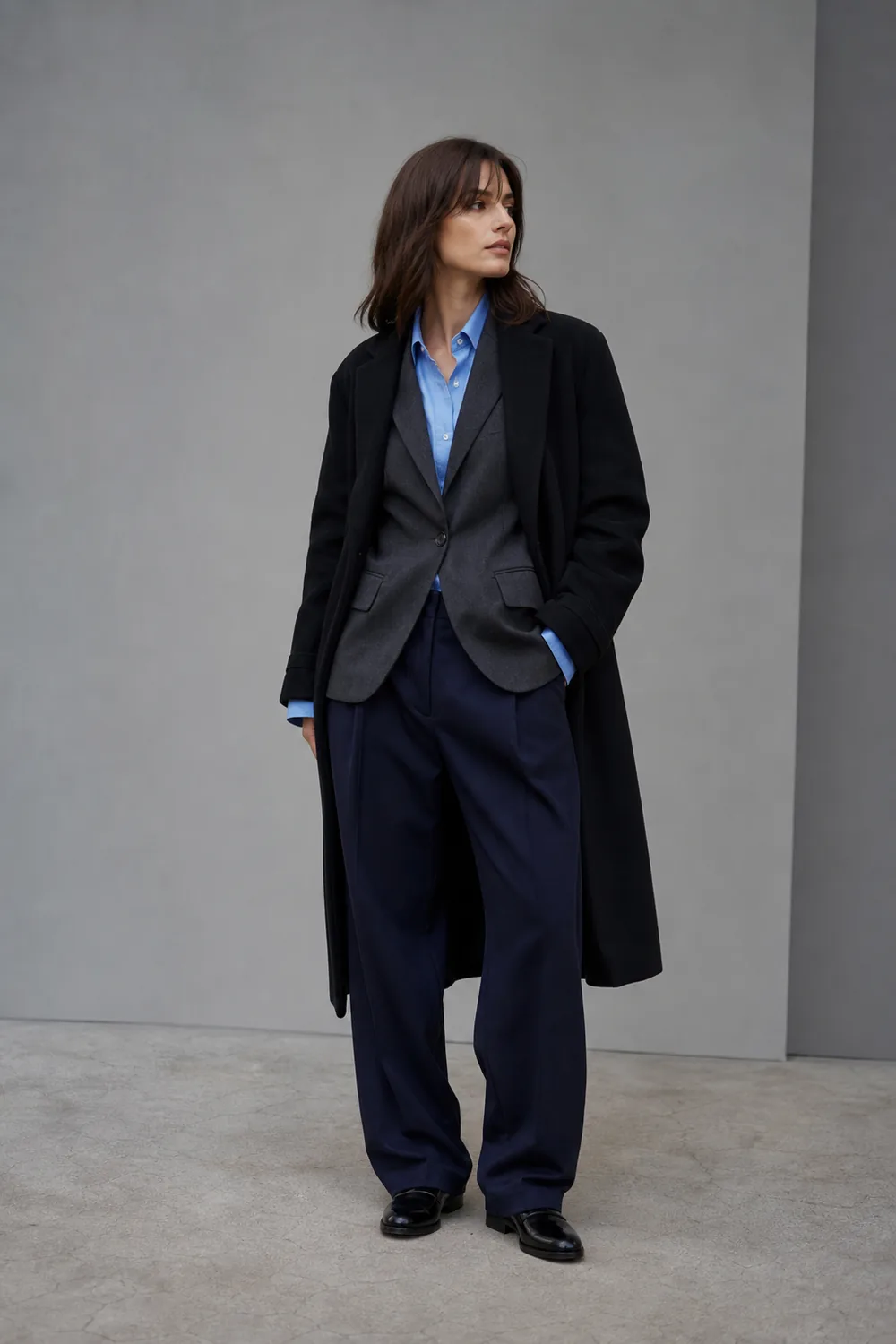
Why it works: The layers, footwear, and fabric weights suit the setting while keeping every garment visually distinct.
Cardigan, Thermal Top, and Ecru Jeans
Wear an oatmeal cardigan over a cream thermal top with ecru jeans and tan boots. Two light knit layers are easier to adjust indoors than one extremely heavy sweater.
Why it works: The layers, footwear, and fabric weights suit the setting while keeping every garment visually distinct.
Quilted Coat and Pleated Skirt
Wear an olive quilted coat, black turtleneck, burgundy pleated midi skirt, and black boots. Use opaque tights and keep the skirt hem well above the boot to separate the moving and structured pieces.
Why it works: The layers, footwear, and fabric weights suit the setting while keeping every garment visually distinct.
Shearling Jacket and Dark Denim
Wear a brown shearling jacket, ivory knit, dark straight jeans, and weatherproof lace-up boots. Keep the base layer simple because the jacket already supplies strong texture and volume.
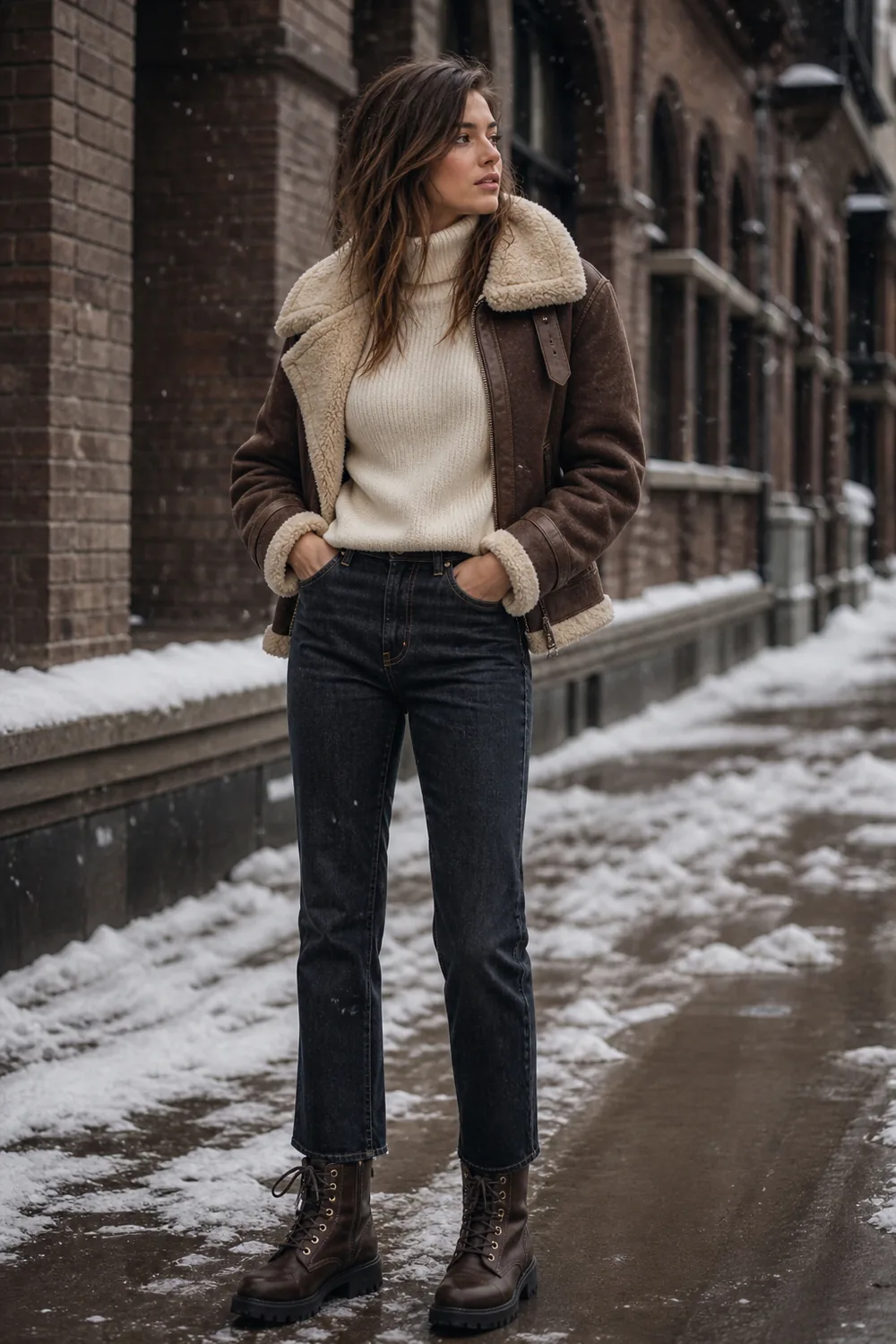
Why it works: The layers, footwear, and fabric weights suit the setting while keeping every garment visually distinct.
Belted Coat and Monochrome Knits
Wear a belted navy coat over a navy sweater and navy trousers with burgundy boots. Small changes in knit and wool texture prevent the tonal palette from becoming flat.
Why it works: The layers, footwear, and fabric weights suit the setting while keeping every garment visually distinct.
Weekend Parka and Corduroy
Wear a forest parka, oatmeal cable-knit sweater, brown corduroy trousers, and hiking boots. The sturdy fabrics work together, but a pale knit keeps the earthy palette from becoming visually heavy.
Why it works: The layers, footwear, and fabric weights suit the setting while keeping every garment visually distinct.
Evening Coat and Satin Skirt
Wear a black wool coat, fine burgundy knit, champagne satin midi skirt, and black ankle boots. Wear a thermal camisole beneath the fine knit and choose a coat long enough to protect most of the skirt.
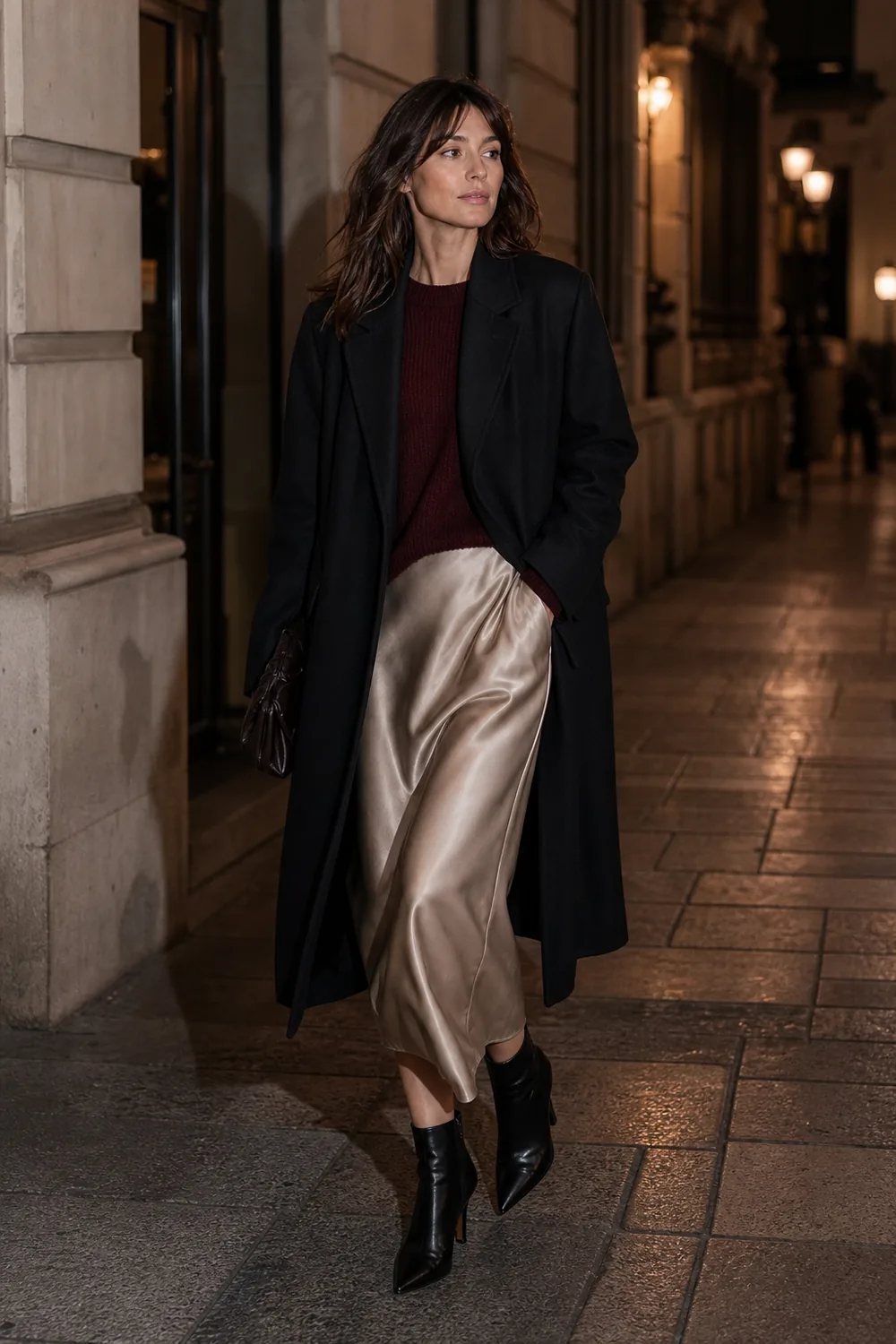
Why it works: The layers, footwear, and fabric weights suit the setting while keeping every garment visually distinct.
How to adapt these outfits
- Check the venue. Match polish to the real setting rather than the occasion label alone.
- Plan the hem. Trousers and skirts should finish cleanly around the chosen shoe.
- Layer with purpose. Every added piece should provide warmth, coverage, or structure.
- Keep the palette connected. Repeat one neutral, leather tone, or metal finish.
FAQ: Questions people actually ask
What is the best order for winter layers?
Start with a breathable close layer, add a knit or tailored mid-layer, then finish with weather-appropriate outerwear. Each layer should fit comfortably beneath the next.
How do I layer a blazer under a coat?
Choose a coat with roomy shoulders and armholes, and use a blazer made from moderate-weight fabric. Check that both lapels lie flat.
Can skirts and dresses work in winter?
Yes. Add opaque tights, tall boots, a warm knit, and outerwear long enough for useful coverage. Fabric weight and wind conditions should guide the combination.
How can winter outfits avoid looking bulky?
Use fine base layers, limit heavy texture to one or two pieces, and make sure coat shoulders and sleeves have enough room for the layers beneath.
More ideas you’ll love

10 Warm-Weather Fall Outfit Ideas for Mild Days
Ten warm-weather fall outfits using breathable fabrics, autumn colors, removable layers, and practical shoes for mild mornings and…
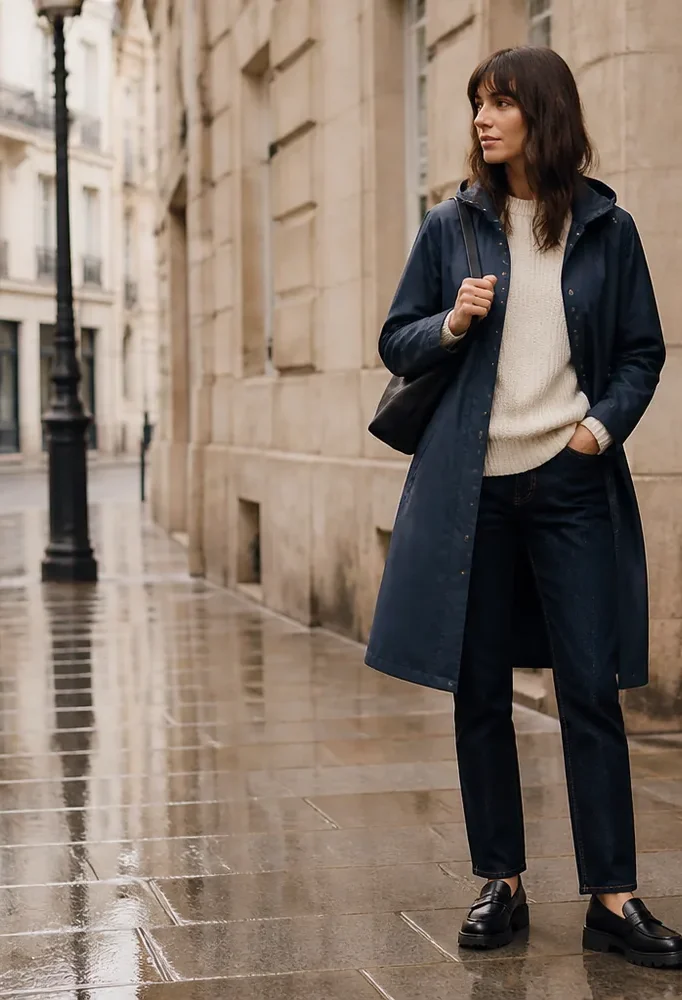
10 Rainy-Day Outfit Ideas That Stay Practical
Ten practical rainy-day outfits using weather-ready layers, sensible hems, and polished shoes for commuting, weekends, errands, and casual…
Seasonal Outfit Ideas
Seasonal outfit ideas for spring, summer, fall and winter, including the awkward transitional weeks most style advice skips…